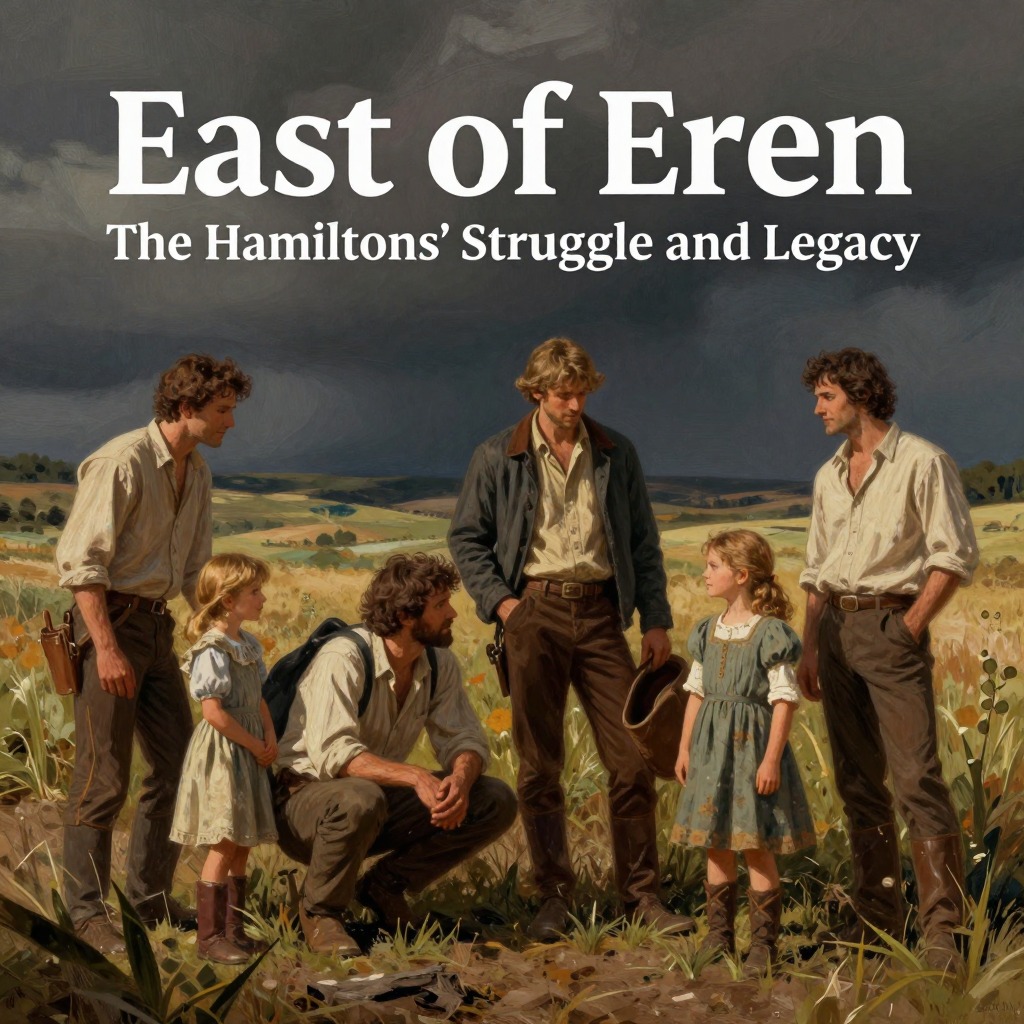
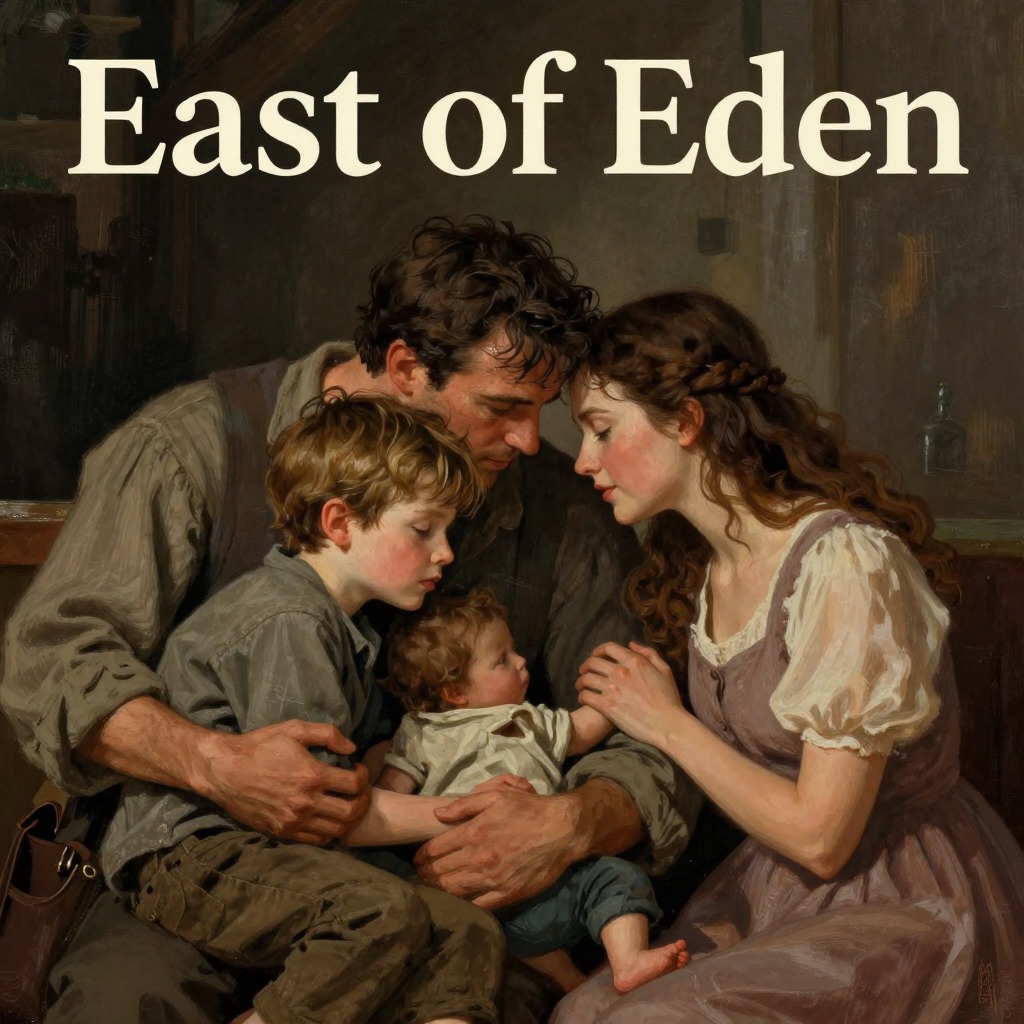
Liza Hamilton
Liza Hamilton, the tiny, humorless Irish wife of Samuel Hamilton, is the moral and practical bedrock of the Hamilton family in the Salinas Valley. With a head full of small, round convictions and a jaw set against any opposing wrongness, she embodies a nail-hard strength and a code of morals that pins down nearly everything pleasant. Her presence is so definitive that her husband and children hold her in a kind of awe, though not in warmth, and her influence stamps every one of her nine children with an indelible mark of iron morals and good manners.
Identity and Background
Liza came to the Salinas Valley from the north of Ireland with her husband Samuel about thirty years before the turn of the century. She is described as a tight, hard little woman, humorless as a chicken, with a dour Presbyterian mind. Her head is small and round, her nose a button, and her chin a hard little set-back affair. She wears her hair always pulled tight back and bunned behind in a hard knot, and her clothes match herself exactly—unmemorable because they are so perfectly suited to her character. She has no spark of humor and only occasionally a blade of cutting wit. Her total intellectual association is the Bible, which she reads without studying or inspecting, and she comes to know it so well that she goes right on reading it without listening. She enjoys universal respect because she is a good woman who raised good children, and she can hold up her head anywhere.
Life and Role in the Family
Liza is the engine of the household, a complete realist who accepts the world as she accepts the Bible—with all its paradoxes and reverses. She does not like death but knows it exists, and when it comes it does not surprise her. She suffers bravely and uncomplainingly through life, convinced that this is the way her God wants everyone to live, and that rewards come later. She is a good plain cook, and her house—it is always her house—is brushed and pummeled and washed. Bearing her children does not hold her back very much; she must have a pelvic arch of whalebone, for she has big children one after the other. She stamps her children with her own character, and they are American children and young men and women, clothed with good manners and iron morals. She hates alcoholic liquors with an iron zeal, regarding drinking as a crime against a properly outraged deity, and she resists its enjoyment by anyone else. The result is that her husband Samuel and all her children have a good lusty love for a drink. When Samuel is very ill and asks for whisky to ease him, she sets her little hard chin and refuses, saying, "Would you go to the throne of God with liquor on your breath?"
Change and Ending
In her old age, Liza's elimination slows up and her doctor tells her to take a tablespoon of port wine for medicine. She forces down the first spoonful, making a crooked face, but it is not so bad. From that moment she never draws a completely sober breath. She always takes the wine in a tablespoon, it is always medicine, but after a time she is doing over a quart a day and she becomes a much more relaxed and happy woman. When Samuel dies, Liza does not crumble. She accepts his death as the thing promised and expected, and she can go on and in her sorrow put a pot of beans in the oven, bake six pies, and plan exactly how much food will be needed to feed the funeral guests. She can in her sorrow see that Samuel has a clean white shirt and that his black broadcloth is brushed and free of spots. She lives on, a tower of strength, and when she finally dies, she does so with a pinched little smile on her mouth, her cheekbones shockingly high when the red is gone from them.
Thematic Significance
Liza Hamilton represents the unyielding, practical, and morally certain force that grounds the Hamilton family against the visionary and sometimes impractical dreaming of her husband Samuel. She is the embodiment of a faith that does not question, a morality that does not bend, and a strength that does not break. Her presence is both a comfort and a constraint, and her legacy is the iron backbone she gives to her children. She is a figure of awe, not warmth, and her life is a testament to the power of unwavering conviction in a world of change and sorrow. She is the rock against which the more volatile and creative spirits of her family are measured, and her influence is felt long after she is gone.